
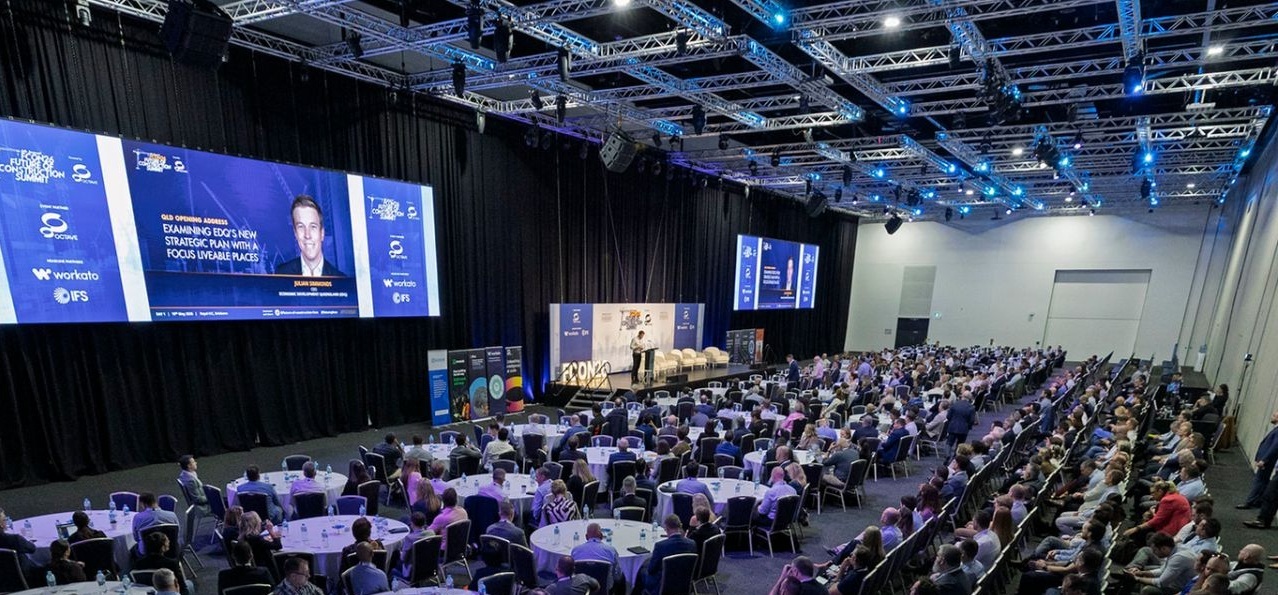
Another FCON has wrapped, and once again, it felt like a good moment to reflect on where the construction industry is heading.
This year marked Docketbook’s fifth Future of Construction Conference in the six years the event has been running. We were told there were more than 1,000 delegates in attendance, and it certainly felt that way on the floor. The conversations were steady, the rooms were full, and there was a clear sense that the industry is continuing to lean into technology, productivity and better ways of working.
For us, conferences like FCON are a fantastic opportunity to catch up with current customers, meet new businesses, and spend time with the other software providers helping shape the construction technology landscape.
Construction does not need another layer of disconnected systems. If technology providers are serious about improving the way the industry works, we need to be equally serious about collaboration. The goal should not be to create more silos of information between platforms, projects or companies. It should be to help information move more clearly through the construction ecosystem.
In a presentation at the CCF National Conference last year, I had the opportunity to share the stage with representatives from Access Construction (Coins), Procore and Tracc Civil, we explored the roles of the various systems – Coins (ERP) as the brain, Procore as the vital organs and Docketbook as the nervous system connecting the supply chain and exchanging critical commercial information.
It is not the only system in the body, and it is not trying to be. Its value comes from connecting the right information at the right point in the workflow, so work completed on site can be captured, approved and carried through to commercial systems with less friction.
The value of this event was also in listening closely to the conversations happening across the industry. One session I always make time for is the industry insights presentation from Oxford Economics’ Nick Fearnley. His presentations consistently bring useful context to what many of us are seeing day to day across the sector and provide insight worth incorporating into future strategies and developments.
Transportation Construction has Passed its Peak
This chart shows what many of our clients already know. The major boom in transportation construction, particularly in Victoria and NSW is subsiding. However, that is creating the space in the market for smaller projects to <$1B to resource up.
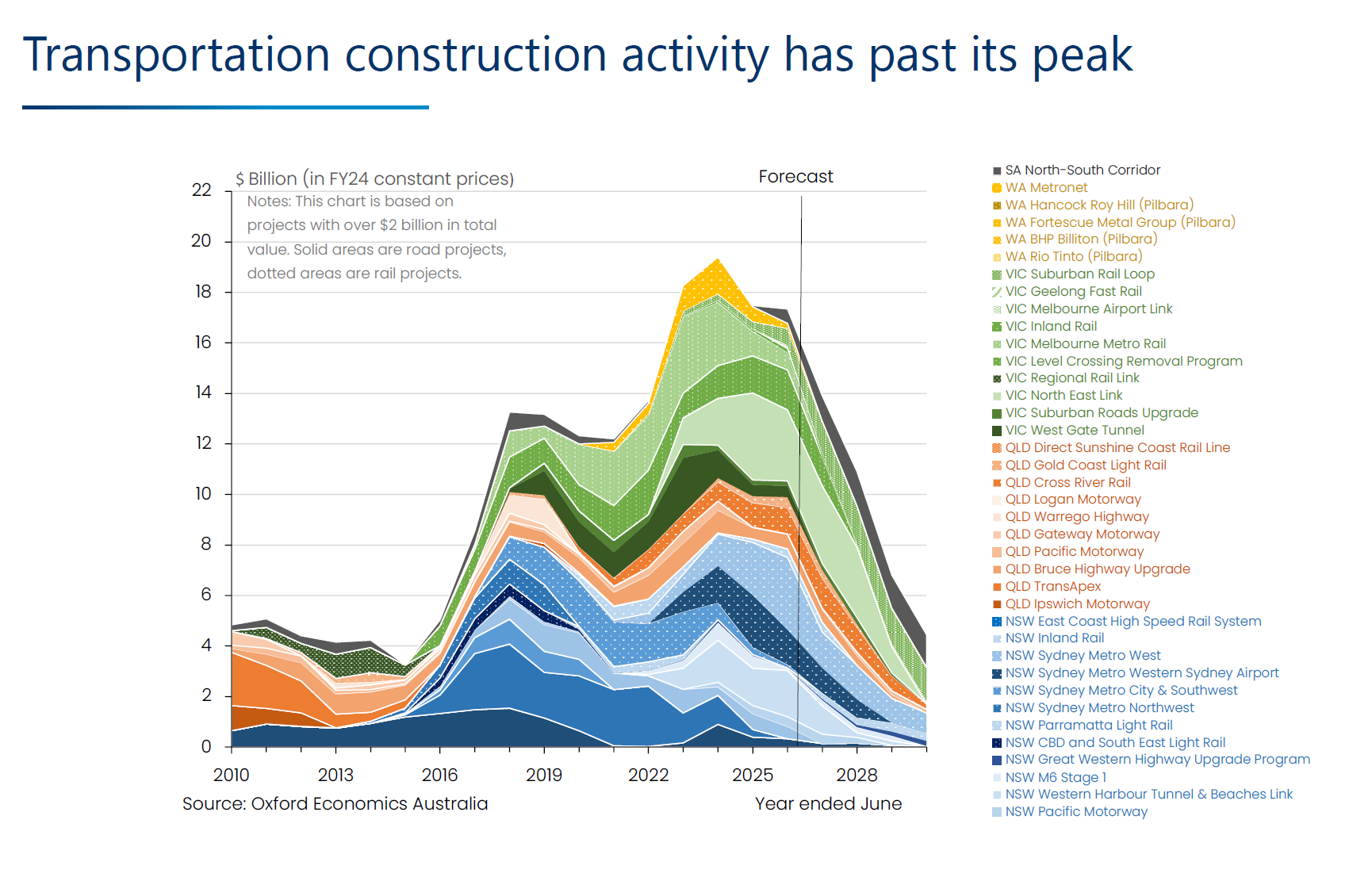
Also, other sectors are more than taking up the resource capacity, in particularly electricity (renewables and transmission) and building (data centres and stadiums).
Olympics Program is Ramping up
It seems like we’ve been talking about it forever, but 2026 sees the start of the ramp. Obviously, a big component of the build is in stadiums but the activity will flow into other sectors to as SEQ gets a much needed infrastructure uplift.

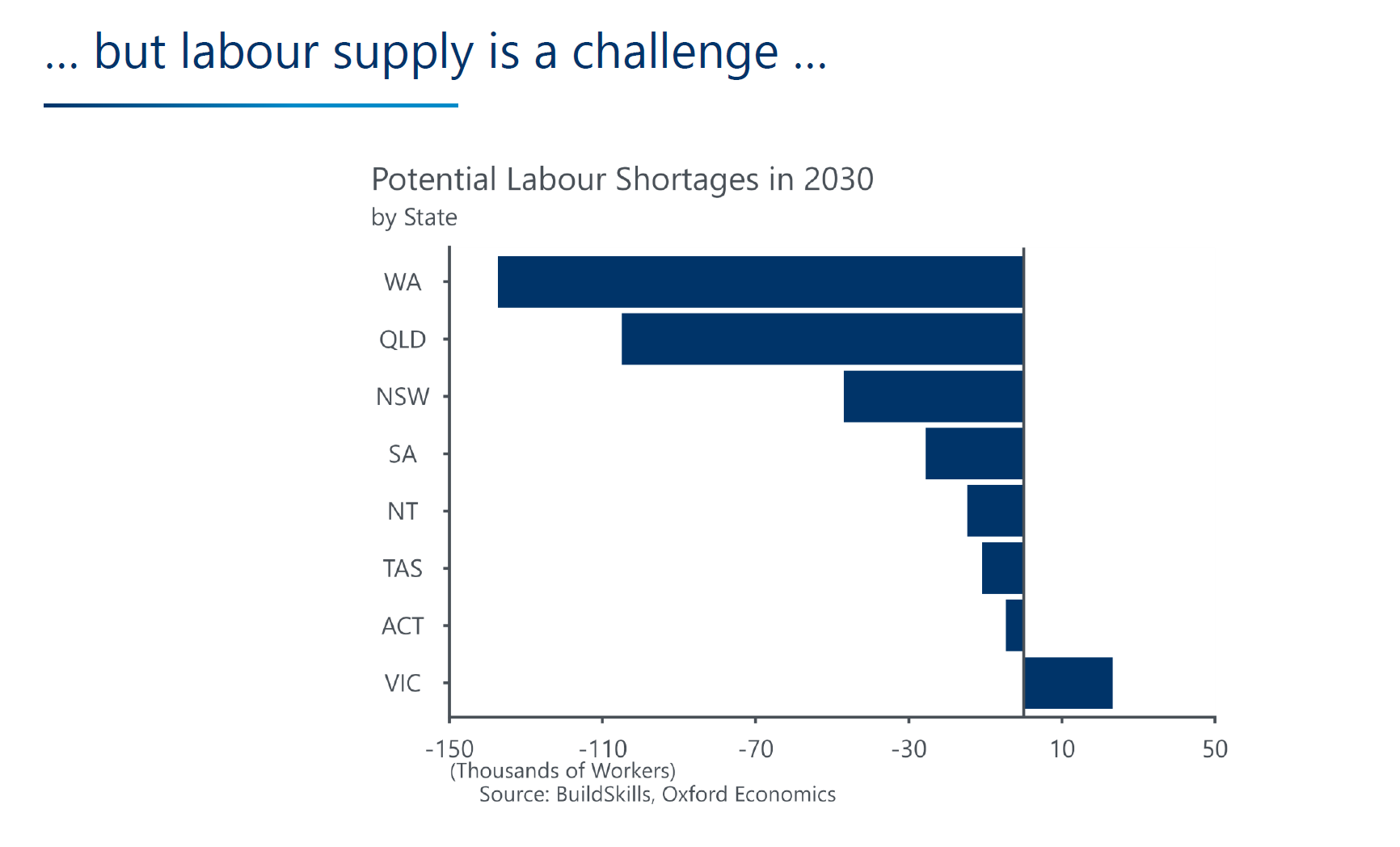
Labour Supply remains a Challenge
Statistics are modelling that, by 2030 there will be a shortage of hundreds of thousands of construction workers, most notably in WA and QLD.
This is compounded by a workforce that is not getting any younger. Oxford statistics show the percentage of the workforce over 55 has grown to over 25% and we struggle to attract and retain younger workers.

Productivity Remains a Challenge
It is an oft-spouted statistic, but recent data from Haver Analytics shows that the industry is not getting any better. Other speakers through the conference identified issues in procurement models, risk transfer and rework as core contributors.

To me, what is obvious is that there is no silver bullet but we need to all do our bit to get more done with less.
For our part, here at Docketbook, it is about eliminating the estimated 2–3 % of construction supply chain costs that are lost in the commercial process of managing and approving costs, creating claims and invoices and managing disputes. Delivering commercial certainty and measuring integrated productivity is a win for contractors and their suppliers – this doesn’t have to be a zero sum game!
I want to again acknowledge Nick Fearnley and the Oxford Economics team. If you get the chance to see one of his presentations, you will not be disappointed. Now it’s up to us, collectively to reverse the trend and get on with delivering that pipeline into 2032 and beyond.


